

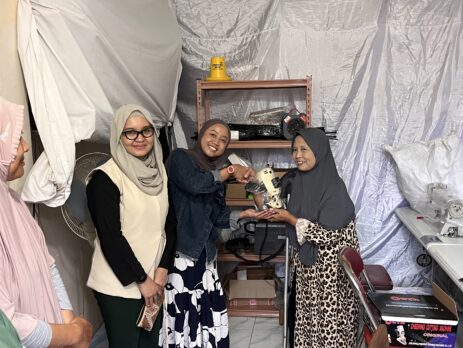
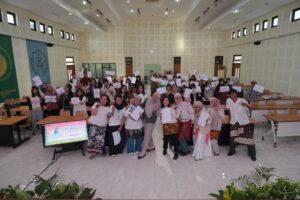
Sleman, 19 November 2025 – Tim Pengabdian Program Inovasi Seni Nusantara (PISN) 2025 dari Institut Seni Indonesia (ISI) Yogyakarta melaksanakan prosesi penyerahan alat produksi kepada mitra Avta Kebaya, kelompok perempuan penyandang disabilitas di Bokoharjo, Prambanan, Sleman. Penyerahan berlangsung di Sanggar Avta Kebaya dan dihadiri oleh perwakilan pimpinan Lembaga Penelitian dan Pengabdian kepada Masyarakat (LPPM) ISI Yogyakarta.
Adapun peralatan yang diserahkan berupa mesin jahit kaos dan perlengkapan pendukung produksi yang akan digunakan untuk meningkatkan kapasitas kerja serta diversifikasi produk Avta Kebaya. Bantuan ini merupakan kelanjutan dari kegiatan pelatihan branding, promosi digital, dan eksplorasi tren mode yang telah dilakukan sebelumnya.
Acara penyerahan alat dihadiri oleh Kepala Pusat Inovasi dan Penerbitan LPPM ISI Yogyakarta, Riza Septriani Dewi, S.Ds., M.Ds.. Kehadiran pimpinan lembaga menegaskan komitmen ISI Yogyakarta dalam memastikan program pengabdian masyarakat tidak berhenti pada tahap pelatihan, tetapi juga memberikan dukungan nyata dalam bentuk sarana produksi.
Ketua tim pelaksana, Amar Leina Chindany, S.Ds., M.Ds., menyampaikan bahwa fasilitas yang diberikan bertujuan untuk memperkuat keberlanjutan program.
“Peralatan ini memungkinkan Avta Kebaya mengimplementasikan hasil pendampingan secara mandiri. Kami ingin memastikan bahwa peningkatan kapasitas tidak hanya bersifat teoretis, tetapi benar-benar dapat diterapkan dalam proses produksi,” ujarnya.
Chinda menambahkan bahwa pendampingan lanjutan tetap akan dilakukan untuk memastikan pemanfaatan alat berjalan optimal.
Dari pihak mitra, perwakilan Avta Kebaya menyampaikan apresiasi atas kepercayaan dan dukungan fasilitas produksi yang selama ini belum mereka miliki. Para peserta menyatakan bahwa ketersediaan alat akan membantu mereka menghasilkan lebih banyak produk dan mengembangkan model busana baru.
Melalui penyerahan fasilitas ini, Avta Kebaya kini memiliki fondasi yang lebih kuat untuk berkembang sebagai unit usaha berbasis komunitas perempuan disabilitas. Program ini sekaligus menjadi wujud nyata kontribusi ISI Yogyakarta dalam mendukung kemandirian ekonomi kelompok rentan melalui penguatan desain, teknologi, dan manajemen usaha.


 EN
EN  ID
ID